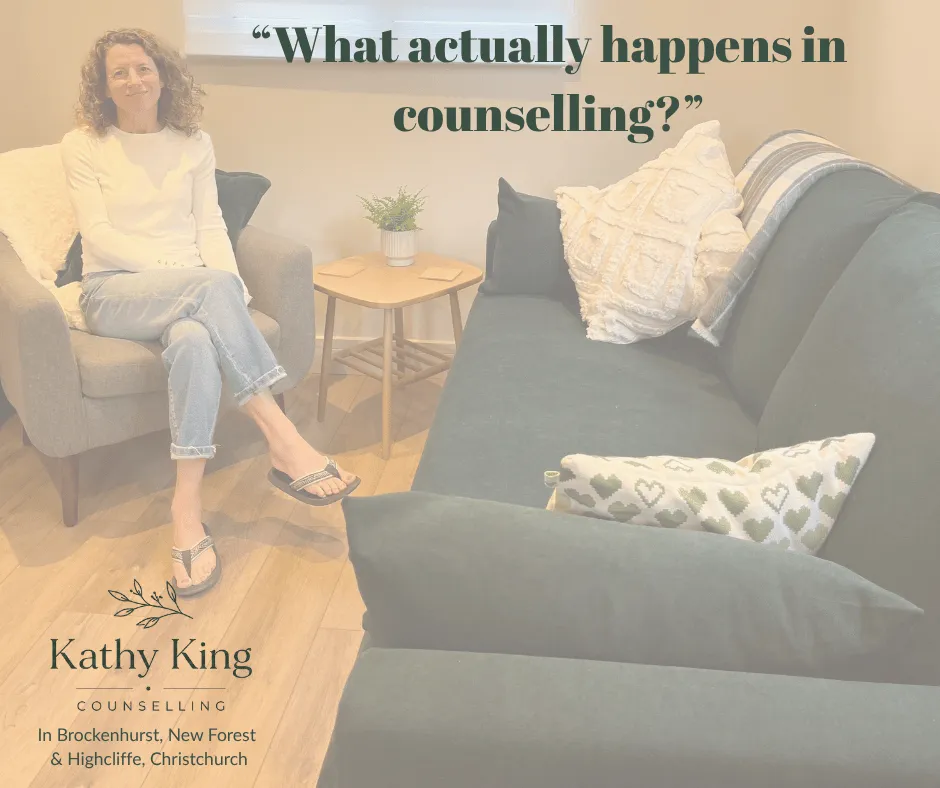
What actually happens in counselling?
You may already be wondering if there's something wrong with you, so the idea of coming to counselling can feel like proof that there is.
It's one of the reasons I find many people put it off. They worry they'll be judged or expected to reveal everything about themselves from the moment they walk through the door.
In truth, counselling is usually much quieter and much more ordinary than people imagine.
So, what actually happens in a counselling session?
Mostly, we talk.
But counselling is a different kind of conversation from those you have with friends or family.
You don't need to worry about burdening me, saying the wrong thing or explaining everything clearly. You don't even need to know where to start.
I will invite you to start with whatever feels important.
And you won't be expected to tell me everything. Not when we first meet, and not at any point in our relationship.
Trust takes time to develop, particularly if you’ve learnt to be wary of what you share.
We notice
We also begin to notice what keeps happening. As we talk, we may start to notice patterns in what you say or how you relate to others.
So, we become curious about those patterns, why they developed and how they helped you.
Sometimes, we slow things down. We might notice what's happening in your body as you talk, explore a feeling or thought more closely, or pay close attention to something happening between us.
Sometimes those small moments tell us quite a lot.
Developing an understanding
Ultimately, I'm not here to tell you what to do.
My job isn't to give you the answers or tell you how to live your life. Instead, my role is to help you understand yourself better.
And gradually, you may begin to notice things changing outside the counselling room too. Perhaps you understand your reactions differently, speak up when you once would have stayed quiet, or simply feel more able to trust yourself.
For me, that's the aim of counselling.
Not fixing what's broken, but helping you understand why you feel the way you do — and what you might now want to do differently.
Get in touch