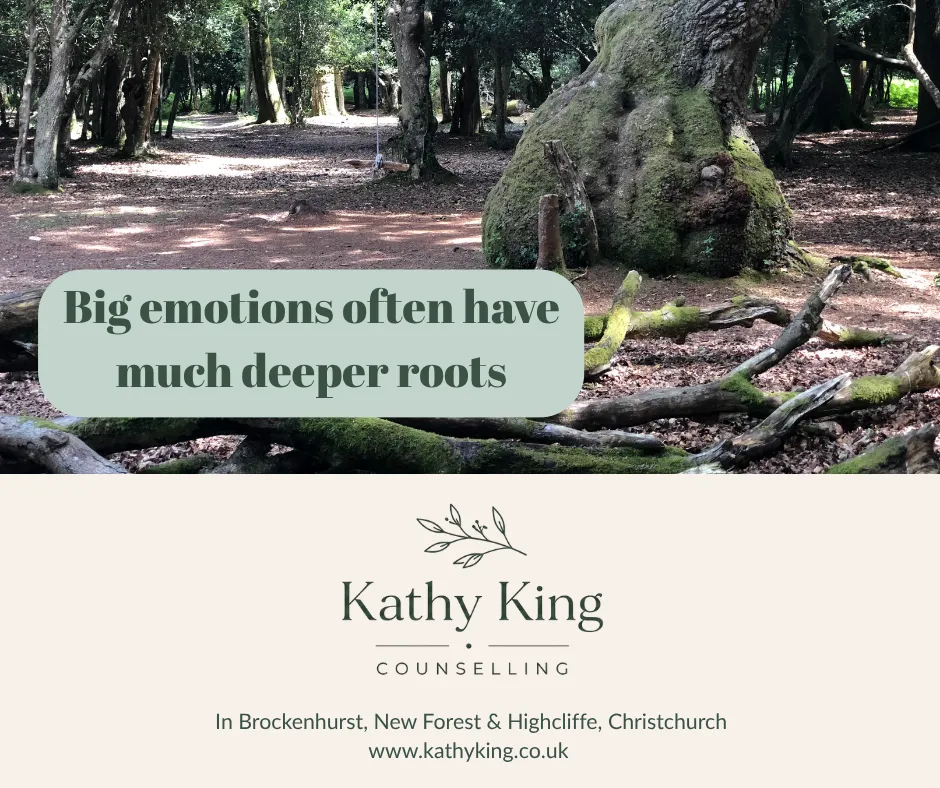
Why can small things trigger such big emotions?
"It sounds really silly... I just don't know why I get so upset."
I hear this so often from clients who can’t quite understand why they get triggered so easily and feel so emotional.
Sometimes it’s a partner who’s made an offhand comment and they couldn't stop thinking about it all day.
Or a friend who took longer than usual to reply to their message, and they felt really anxious or rejected.
Or someone criticised their work or something they said, and instead of brushing it off, they felt deeply hurt for days afterwards – or even lashed out.
From the outside, these situations can seem quite small.
So why do they sometimes create such overwhelming emotions?
It's usually not about the present moment
When your emotional reaction feels much bigger than the event itself, it's often because something deeper has been touched.
Our brains are constantly comparing what's happening now with experiences we've had before.
Without us even realising it, something that happens today can remind our nervous system of something from our past.
And it’s not always obvious what the connection is.
-Perhaps growing up you learnt that making mistakes led to criticism.
-Maybe love or acceptance was only available when you did well or got things right.
-Maybe you experienced rejection, bullying, neglect or simply never felt truly understood.
Those experiences don't just disappear because time has passed.
Instead, our nervous system learns to stay alert for anything that feels similar.
Your brain is trying to protect you
The emotional part of your brain is incredibly quick. It responds way before your rational brain.
Its job isn't to decide whether something is true, but to keep you safe.
If it recognises something that resembles an earlier emotional wound, it can react before you've had chance to think logically.
That's why you might suddenly feel:
Hurt by a comment that other people wouldn't think twice about.
Angry over something relatively small.
Ashamed after making a simple mistake.
Overwhelmed by situations you know "shouldn't" feel so difficult.
It’s so important to know that your reaction isn't because you're weak or over-sensitive. It's because your brain learnt that these situations mattered.
This isn't about blaming the past
Understanding where your reactions come from isn't about blaming your parents or dwelling on your childhood.
(Most people had loving families who did the very best they could.)
It's about unravelling the many subtle experiences that gradually taught you:
-"I need to keep everyone happy."
-"I'm not good enough."
-"People leave."
-"I mustn't get things wrong."
Those beliefs can quietly shape how you respond today.
Why understanding can start to change everything
Many people try to stop themselves feeling these emotions by telling themselves they're overreacting.
They criticise themselves for being too emotional, but that rarely helps.
When we begin to understand why a reaction makes sense, something changes.
Instead of asking,
"What's wrong with me?"
we begin asking,
"What might this feeling be trying to protect me from?"
That shift often brings compassion instead of shame, and that's where change begins.
Counselling can help you join the dots
Counselling isn't about getting rid of your emotions. It's about deeply understanding them.
It’s about gently exploring – together - the experiences that shaped how your mind and nervous system learned to respond, helping you make sense of reactions that have never quite made sense before.
Because once you understand why something affects you so deeply, those feelings often become far less frightening.
You’re not broken. There’s a reason you feel this way.
www.kathyking.co.uk